Key takeaways
- Established diabetic peripheral neuropathy usually cannot be fully reversed with current standard treatments, but symptoms and some nerve-function measures may improve.
- Proximal neuropathy and focal neuropathy not caused by a trapped nerve usually improve; proximal neuropathy may take a few years.
- Blood sugar control can prevent or delay neuropathy in type 1 diabetes and may slow it in type 2, but it cannot reverse nerve loss.
- ADA recommends neuropathy checks from diagnosis in type 2 diabetes, from five years after diagnosis in type 1, then at least yearly.
Established nerve damage (diabetic peripheral neuropathy) from diabetes cannot be fully reversed with current standard treatments. However, its symptoms and some measures of nerve function can improve, and certain diabetic neuropathy syndromes may substantially recover. Diabetic neuropathy is nerve damage caused by diabetes, according to the National Institute of Diabetes and Digestive and Kidney Diseases (NIDDK).
About 589 million adults aged 20 to 79 had diabetes worldwide in 2024, according to the International Diabetes Federation (IDF). In the United States, 40.1 million people of all ages had diabetes in 2023, according to the Centers for Disease Control and Prevention (CDC). Up to half of people with diabetes have peripheral neuropathy, NIDDK said in 2018.
Blood sugar control can prevent neuropathy in type 1 diabetes, but in type 2 diabetes it may only modestly slow it, according to the 2026 Standards of Care from the American Diabetes Association (ADA).
Which types of diabetic neuropathy can recover
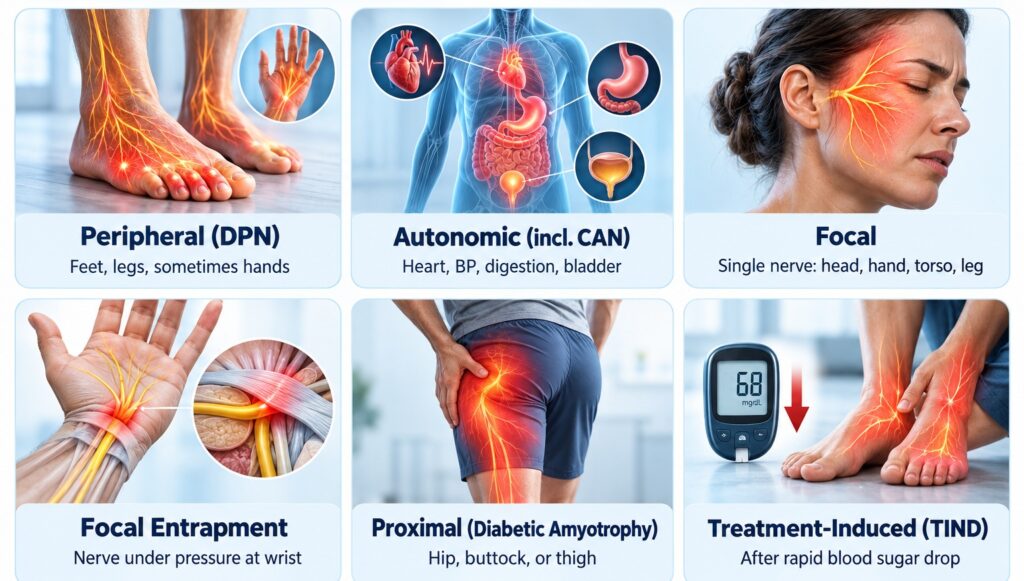
Proximal neuropathy and focal neuropathy not caused by a trapped nerve usually improve on their own. Established peripheral neuropathy and established cardiovascular autonomic neuropathy (CAN), which affects the nerves that control heart rate and blood pressure, typically do not reverse with current treatments, according to ADA.
The table lists each type.
| Type | What it affects | What usually happens | Source |
|---|---|---|---|
| Peripheral (diabetic peripheral neuropathy, DPN) | Feet and legs, sometimes hands and arms | Established nerve loss does not reverse | NIDDK; ADA 2026 |
| Autonomic, including CAN | Heart rate, blood pressure, digestion, bladder, and other internal organs | Therapies have failed to reverse established CAN, and treatment focuses on symptoms | NIDDK; ADA 2017 |
| Focal, not from entrapment, including cranial nerves | Single nerves, most often in the hand, head, torso, or leg | Starts suddenly and usually improves within weeks or months | NIDDK; ADA 2017 |
| Focal entrapment, such as carpal tunnel syndrome | A nerve under pressure, such as at the wrist | May worsen if untreated, but symptoms can improve with treatment, such as splinting or surgical decompression when appropriate. | NIDDK |
| Proximal (diabetic amyotrophy) | Hip, buttock, or thigh, usually one side | Usually improves within a few years, though many people keep some symptoms | NIDDK; ADA 2017 |
| Treatment-induced (TIND) | Pain or autonomic symptoms after a fast fall in average blood sugar | Improved substantially after 18 months in a small series | Gibbons and Freeman 2010 |
ADA calls diabetic neuropathy a diagnosis of exclusion, made after other causes of nerve damage are ruled out.
What blood sugar control can and cannot do
Blood sugar control can prevent or delay neuropathy in type 1 diabetes and may slow it in type 2, but it does not reverse nerve loss. ADA grades the evidence for this guidance differently in type 1 and type 2 diabetes, with an A for type 1 and a lower C for type 2.
ADA also gives a B grade to managing weight, blood pressure, and blood fats to reduce the risk of neuropathy or slow it.
The table lists results from two trials and one review. These studies measured whether neuropathy started or worsened, not whether it reversed.
| Study | Who was counted | Follow-up | What was measured | Result |
|---|---|---|---|---|
| DCCT, 1995 | 1,441 people aged 13 to 39 with type 1 diabetes | 5 years | New confirmed neuropathy | 5% with intensive therapy vs 13% with conventional therapy |
| Cochrane review, 2012 | 2 trials, 1,228 people with type 1 diabetes | Varied; results per year | Clinical neuropathy | 1.84 percentage points a year lower with tighter control |
| Cochrane review, 2012 | 4 trials, 6,669 people with type 2 diabetes | Varied; results per year | Clinical neuropathy | 0.58 percentage points a year lower, not statistically significant (P = 0.06) |
| ACCORD, 2010 | 10,251 adults with type 2 diabetes and cardiovascular disease or two or more risk factors | Median 5.0 years | New neuropathy on a screening score | Slightly lower rate with intensive control (hazard ratio 0.92) |
In type 1 diabetes, intensive therapy in the DCCT cut new cases of neuropathy by nearly two-thirds over five years.
ACCORD’s intensive arm aimed for an HbA1c below 6.0% (42 mmol/mol). HbA1c is a blood test of average blood sugar. The intensive arm was stopped after a median of 3.7 years because more people in it died.
Tighter control also raised the risk of severe low blood sugar across the trials in a 2012 Cochrane review.
GLP-1 medicines and diabetic neuropathy
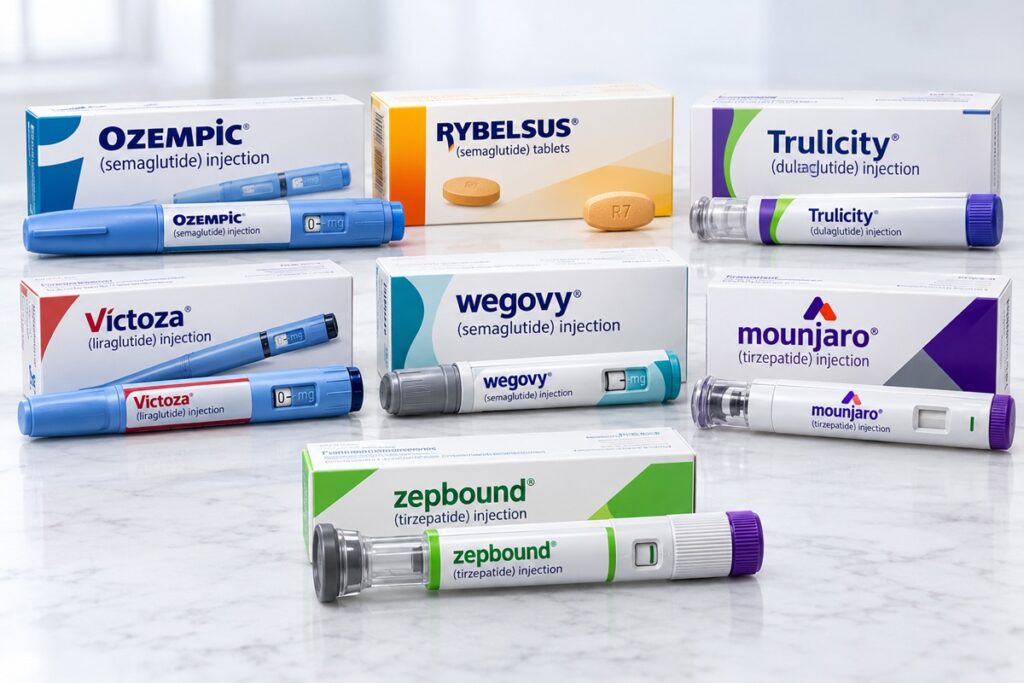
None of seven US labels for GLP-1 medicines lists diabetic neuropathy or nerve pain as an approved use. The seven are Ozempic, Rybelsus, Trulicity, Victoza, Wegovy, and the two tirzepatide brands, Mounjaro and Zepbound.
All seven list dysesthesia, an altered skin sensation such as burning or tingling, as a side effect. The labels do not describe it as diabetic neuropathy. In Wegovy trials in adults with and without type 2 diabetes, it was reported in 22% of people on 7.2 mg, 6% on 2.4 mg, and 0.3% on placebo, according to the Wegovy label.
The Mounjaro and Zepbound labels report it in under 1% of people, and the other four list it among reports made after approval.
The evidence that GLP-1 medicines benefit peripheral neuropathy is “still controversial and limited,” according to ADA. In a 2023 review, the two larger studies found no difference in new neuropathy compared with other glucose-lowering treatments.
A 2026 study in Rome, which looked at 500 people with type 2 diabetes at one point in time, linked GLP-1 use to lower odds of neuropathy. It shows an association, not cause.
When a fast drop in HbA1c brings on nerve pain
Treatment-induced neuropathy of diabetes (TIND) is nerve pain or autonomic symptoms that start within eight weeks of a large, fast fall in HbA1c. One study defined that fall as at least 2 percentage points (about 22 mmol/mol) over three months. ADA’s 2017 position statement calls TIND rare.
That study, at a specialist referral clinic for neuropathy, found TIND in 104 of 954 people evaluated from 2008 to 2012, about one in nine. The authors note that this share may not reflect primary care.
In that clinic, a fall of 2–3 points over three months carried about a one-in-five risk, and a fall of more than four points carried a risk above four in five, according to Gibbons and Freeman.
In an earlier series of 16 people with TIND, pain, autonomic symptoms, and nerve fiber density (a count of small nerve fibers in a skin biopsy) improved substantially after 18 months of blood sugar control.
Weight loss, exercise, and surgery

Weight loss and exercise improved symptom scores in some studies, but nerve exams and nerve fiber counts usually did not improve in people with diabetes.
The Look AHEAD trial assigned 5,145 adults aged 45 to 76 with type 2 diabetes and overweight or obesity to a lifestyle program focused on weight loss or to diabetes education. The program group’s self-reported neuropathy symptoms fell and stayed lower than the education group’s. A single exam 1–2.3 years after the program ended found no difference in neuropathy between the groups, according to the Look AHEAD study. However, light-touch sensation was better preserved in the intervention group when results from both great toes were combined.
Pain scores fell in 17 people with diabetic neuropathy during a 10-week exercise pilot with no control group. Nerve fiber density in their skin biopsies did not change significantly.
Among 79 adults with severe obesity followed for two years after weight-loss surgery, nerve fiber density in the thigh rose in people with normal blood sugar or prediabetes. It did not rise significantly in people with diabetes.
The evidence on exercise is low in strength, and randomized trials of weight-loss surgery are lacking, according to ADA.
Pancreas transplant in type 1 diabetes
Pancreas transplant is linked to the clearest long-term nerve improvement in the research on this page, but only in people with type 1 diabetes who received one. Many also had kidney failure.
A 1997 study followed 115 people with a working transplant and 92 people on insulin for up to 10 years. The insulin group’s nerve measures worsened. After transplant, nerve conduction tests, which measure how well nerves carry signals, improved at every check, while clinical exams and autonomic tests improved only slightly.
An earlier study of 61 transplant recipients concluded that progression “may be halted.”
Nerve damage from other causes that may be treatable
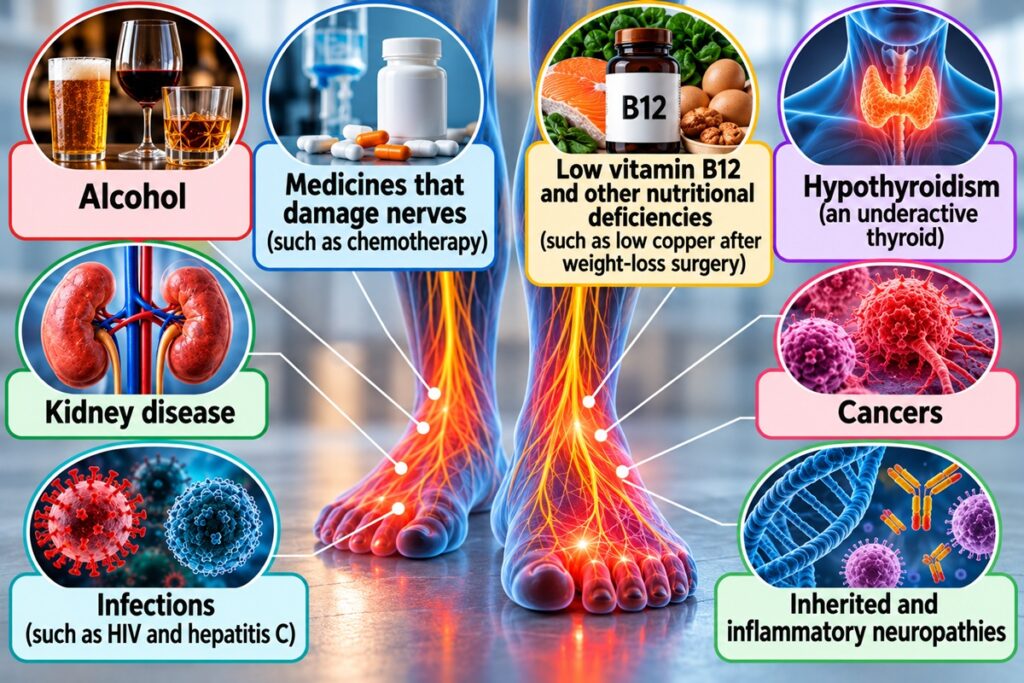
People with diabetes can also have nerve damage from other causes, and these may be treatable, according to ADA. Its list of causes to consider includes:
- Alcohol
- Medicines that damage nerves, such as chemotherapy
- Low vitamin B12 and other nutritional deficiencies, such as low copper after weight-loss surgery
- Hypothyroidism, an underactive thyroid
- Kidney disease
- Cancers
- Infections such as HIV and hepatitis C
- Inherited and inflammatory neuropathies
Metformin, a type 2 diabetes medicine, is associated with vitamin B12 deficiency, according to ADA. In the Diabetes Prevention Program Outcomes Study of people who had prediabetes when they joined, 4.3% of the metformin group and 2.3% of the placebo group had low B12 after five years.
Neuropathy was more common among metformin users with low B12, according to a 2016 analysis. The study did not test whether B12 treatment reverses neuropathy.
ADA’s guidance for clinicians suggests periodic B12 testing in people taking metformin. A doctor may also test for thyroid problems or kidney disease, NIDDK says.
Pain treatments ease symptoms but do not repair nerves
Pain medicines “can help with the pain” but “do not change the nerve damage,” according to NIDDK. No therapy that changes the course of diabetic neuropathy has been approved, ADA’s 2017 position statement adds.
ADA and the American Academy of Neurology (AAN) name four first-line drug classes for this pain: gabapentinoids, serotonin-norepinephrine reuptake inhibitors (SNRIs), tricyclic antidepressants, and sodium channel blockers. No compelling evidence supports blood sugar or lifestyle management as pain treatment, according to ADA.
The table lists treatments the US Food and Drug Administration (FDA) has approved for this pain.
| Treatment | FDA-approved use | Note |
|---|---|---|
| Duloxetine | DPN pain in adults | An SNRI |
| Pregabalin (Lyrica) | DPN pain | A gabapentinoid |
| Tapentadol extended-release (Nucynta ER) | Severe, persistent DPN pain that needs an opioid and cannot be treated otherwise | An opioid; ADA advises against opioids except in rare circumstances, and AAN advises against them for this pain |
| Capsaicin 8% patch (Qutenza) | DPN pain of the feet | Skin patch |
| Spinal cord stimulators (implanted devices) | Lower-limb pain associated with diabetic neuropathy | Approved for five makers’ systems from 2021 to 2024, for pain, not nerve repair |
The capsaicin patch is applied only by a health professional, according to the Qutenza label.
Alpha-lipoic acid and other supplements
Alpha-lipoic acid missed its main goal in NATHAN 1, a four-year trial of 460 people with mild to moderate diabetic neuropathy. Some secondary nerve scores favored it, but serious adverse events were more common with it than with placebo.
The FDA does not approve dietary supplements before they are sold. Diabetes experts have made no special recommendations about supplements for people with diabetes, NIDDK said in 2018.
How common is diabetic neuropathy?
Estimates range from 10% to 15% of people newly diagnosed with type 2 diabetes to over half of all people with diabetes. CDC’s National Diabetes Statistics Report gives no national figure for neuropathy. The table lists the estimates.
| Measure | Figure | Who was counted | Source and year |
|---|---|---|---|
| Peripheral; autonomic | Up to half; more than 30% | People with diabetes | NIDDK, 2018 |
| Any diabetic neuropathy | Over half | People with diabetes | MedlinePlus, 2019 |
| Peripheral neuropathy | 10% to 15% at diagnosis and about 50% after 10 years in type 2; at least 20% after 20 years in type 1 | People with type 2 or type 1 diabetes | ADA, 2017 |
| Peripheral neuropathy with no symptoms | Up to 50% of cases | People with peripheral neuropathy | ADA, 2026 |
| Lower-limb amputation hospital discharges, all causes | 166,000 in 2021 | US adults 18 and older with diabetes | CDC, 2026 |
The figures use different definitions, populations, and years, so they should not be compared directly or added together.
ADA recommends checking for peripheral neuropathy from diagnosis in type 2 diabetes and from five years after diagnosis in type 1, then at least yearly. The checks include a yearly monofilament test, which touches the foot with a thin filament to test feeling. In one trial ADA cites, neuropathy was a contributing cause in 78% of people with diabetes who had foot ulcers.
How diabetic neuropathy is counted and coded
In ICD-10-CM, the US version of the International Classification of Diseases, diabetic neuropathy is coded E11.40 to E11.49 in type 2 diabetes and E10.40 to E10.49 in type 1. The codes separate mononeuropathy, polyneuropathy, autonomic neuropathy, and amyotrophy. Alcoholic polyneuropathy has its own code, G62.1.
In the World Health Organization’s ICD-11, diabetic polyneuropathy is code 8C03.0, in the chapter on the nervous system. A separate code, MG30.51, covers chronic peripheral neuropathic pain that may be associated with diabetes; however, it is not specific to diabetes. Diabetic polyneuropathy is identified by 8C03.0, with additional coding as appropriate.
SDG indicator 3.4.1, part of the UN Sustainable Development Goals, measures the chance of dying between ages 30 and 70 from four noncommunicable diseases: cardiovascular disease, cancer, diabetes, and chronic respiratory disease. It has no separate measure for neuropathy.
Frequently asked questions
Is there an HbA1c level at which neuropathy starts?
The studies on this page do not establish an HbA1c level at which diabetic neuropathy starts. In a Japanese insurance-claims study of people with type 2 diabetes, a higher three-year average HbA1c was linked to higher odds of neuropathy. The study was observational, so it shows an association only.
Can diabetic neuropathy stop getting worse?
Diabetic neuropathy can stop getting worse in some people. Managing blood sugar, blood pressure, and cholesterol “can keep nerve damage from getting worse,” according to NIDDK. ADA’s evidence for blood sugar control is stronger in type 1 diabetes than in type 2.
This page summarizes group-level research and guidelines on diabetic neuropathy. It does not tell any individual what tests, diet, or medicine to use.
Sources
- Definitions and classification: NIDDK What Is Diabetic Neuropathy, 2018; NIDDK Peripheral Neuropathy, 2018; NIDDK Focal Neuropathies, 2018; NIDDK Proximal Neuropathy, 2018; MedlinePlus Diabetic Nerve Problems, 2019
- ADA guidance: ADA Standards of Care, Section 12, 2026; ADA Standards of Care, Section 9, 2026; ADA position statement on diabetic neuropathy, 2017
- Global and US figures: IDF Diabetes facts and figures, 2024; CDC National Diabetes Statistics Report, 2026, data for 2021 and 2023
- Glucose control trials: DCCT Research Group, Ann Intern Med, 1995; Callaghan et al., Cochrane review, 2012; Ismail-Beigi et al., Lancet (ACCORD), 2010
- Treatment-induced neuropathy: Gibbons and Freeman, Brain, 2015; Gibbons and Freeman, Ann Neurol, 2010
- Weight loss, exercise, and surgery: Look AHEAD Research Group, Diabetologia, 2017; Kluding et al., J Diabetes Complications, 2012; Reynolds et al., Diabetologia, 2023
- Pancreas transplant: Navarro et al., Ann Neurol, 1997; Kennedy et al., NEJM, 1990
- Other causes and B12: Aroda et al., JCEM (DPPOS), 2016
- Pain treatments: Duloxetine label, 2026; Lyrica label, 2025; Nucynta ER label, 2026; Qutenza label, 2026; Price et al., Neurology (AAN guideline), 2022; FDA premarket approval supplements P130022/S039, P840001/S469, P010032/S189, P030017/S357, and P190002/S019 (openFDA), 2021 to 2024
- Supplements: Ziegler et al., Diabetes Care (NATHAN 1), 2011; FDA Questions and Answers on Dietary Supplements
- GLP-1 medicines: Ozempic label, 2026; Rybelsus label, 2026; Trulicity label, 2026; Victoza label, 2025; Wegovy label, 2026; Mounjaro label, 2026; Zepbound label, 2026; Goldney et al., Diabetologia, 2023; Falco et al., Pain, 2026
- HbA1c and neuropathy: Nozawa et al., Drugs Real World Outcomes, 2022
- Counting and coding: ICD-10-CM search, NLM Clinical Tables, 2026; WHO ICD-11 browser, 2025; UN SDG indicator 3.4.1 metadata, 2024