Key takeaways
- Cardiometabolic disease is a broad term for long-term conditions of the heart, blood vessels, and metabolism, including diabetes and high blood pressure.
- High blood pressure and prediabetes each affected more than two in five US adults in 2021 to 2023, the group’s most common conditions.
- Cardiometabolic disease is not metabolic syndrome: it is a broad group, while metabolic syndrome is one diagnosis requiring three or more of five measures.
- These conditions often cause no symptoms. Screening includes blood pressure, blood sugar, A1C, cholesterol, waist, weight, and kidney function tests.
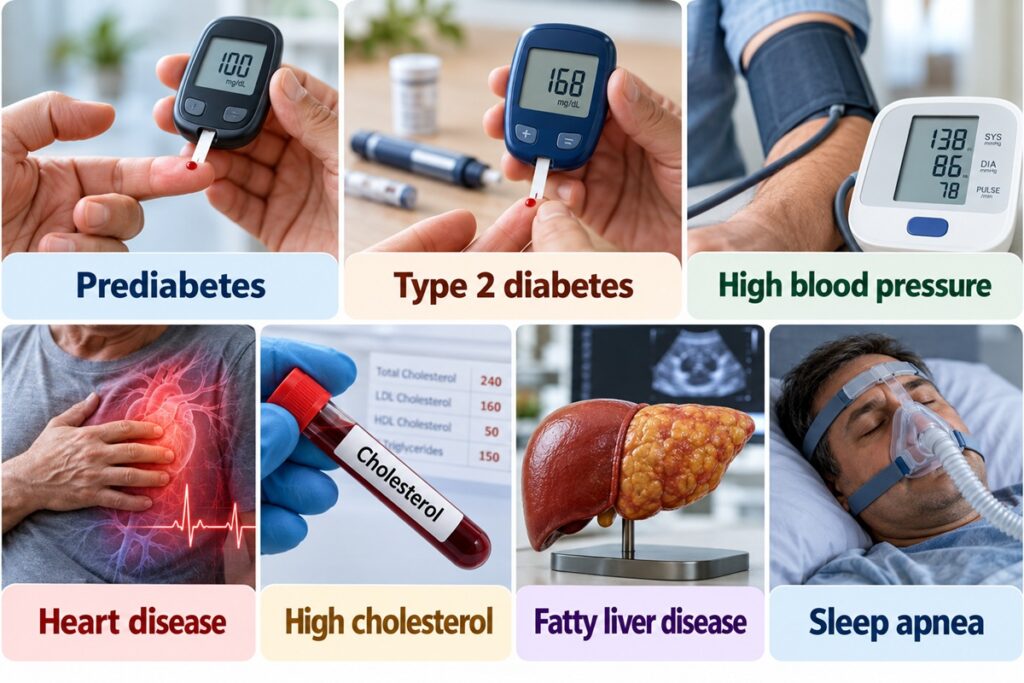
Cardiometabolic disease is a name for a group of long-term conditions of the heart, blood vessels, and metabolism that share causes and often occur together. Metabolism is how the body turns food into energy. Conditions commonly discussed under the term include type 2 diabetes, prediabetes, high blood pressure, heart disease, high cholesterol, fatty liver disease, and sleep apnea.
Fewer than one in 14 US adults had optimal cardiometabolic health in 2017 to 2018, according to a 2022 study of CDC survey data. Optimal meant a healthy BMI (body mass index) and healthy levels of blood sugar, blood fats, and blood pressure, with no heart or blood vessel disease.
Excess fat around the abdomen and insulin resistance can raise blood sugar, blood pressure, and blood fats at the same time. Insulin resistance means the body does not respond well to insulin. This shared cause helps explain why one diagnosis often comes with others.
Conditions in the cardiometabolic group
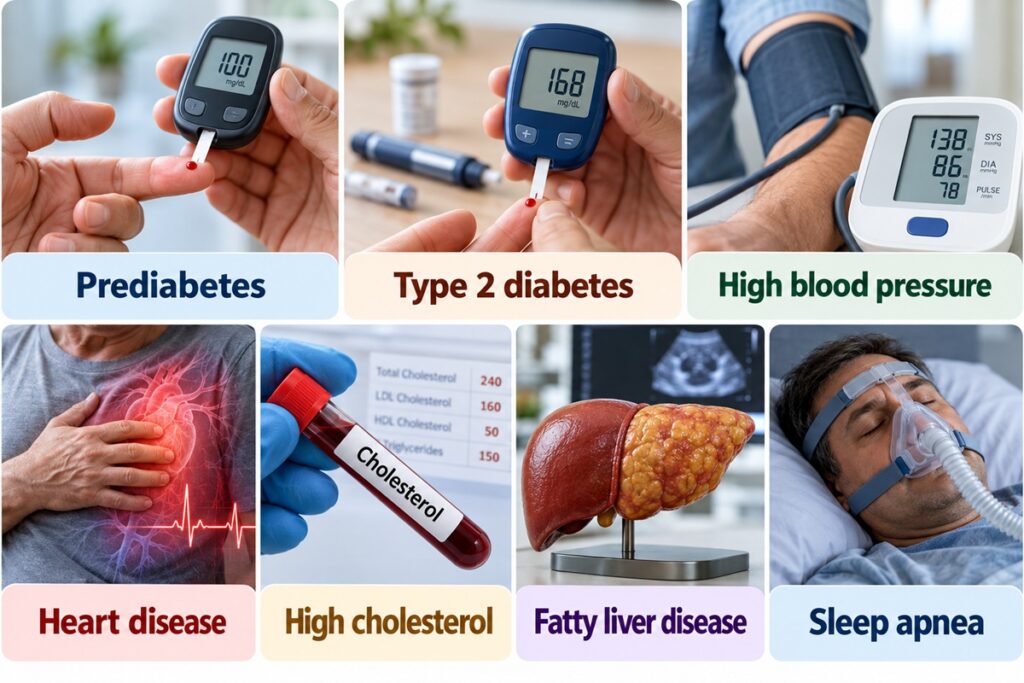
The cardiometabolic group on this page covers seven long-term conditions.
- Prediabetes is blood sugar above normal but below the diabetes range.
- Type 2 diabetes is high blood sugar that can damage blood vessels and nerves over time.
- High blood pressure is blood pressure that stays at or above 130/80 mm Hg.
- Heart disease is twice as likely in people with diabetes, CDC says.
- High cholesterol, counted as total cholesterol of 240 mg/dL or higher, affected about one in six US adults 40 to 59 in 2021 to 2023, NCHS data show.
- Fatty liver disease is fat buildup in the liver that raises the risk of heart and blood vessel disease.
- Sleep apnea can reduce the oxygen the body gets during sleep and can keep blood pressure higher for longer at night.
Published definitions group different conditions under the term. Some, such as the American Heart Association’s cardiovascular-kidney-metabolic (CKM) syndrome, also include kidney disease and obesity.
Why these conditions occur together
Abdominal fat and insulin resistance can raise LDL cholesterol, often called bad cholesterol, and lower HDL cholesterol, often called good cholesterol. Insulin resistance can also raise blood pressure and triglycerides, a type of blood fat.
Nearly nine in ten US adults with diagnosed diabetes had overweight or obesity in 2021 to 2023, according to CDC’s National Diabetes Statistics Report. About three in four had blood pressure of 130/80 mm Hg or higher or took blood pressure medicine.
CDC links sleep apnea to a higher risk of high blood pressure, heart attack, and stroke. Obesity can cause sleep apnea.
The current definition of fatty liver disease requires fat in the liver plus at least one of five cardiometabolic risk factors. Its current name is metabolic dysfunction-associated steatotic liver disease (MASLD).
CDC names diabetes and high blood pressure as the two biggest causes of chronic kidney disease. About two in five US adults with diabetes, diagnosed or undiagnosed, had chronic kidney disease in 2021 to 2023. So did about one in five adults with high blood pressure.
Hypothyroidism, an underactive thyroid, can contribute to high cholesterol, NIDDK says.
In a 2015 pooled study of 91 cohorts, having any two of diabetes, stroke, or heart attack at age 60 was linked to about 12 fewer years of life. Most participants were enrolled in Europe.
GLP-1 medicines and cardiometabolic disease
Several GLP-1 medicines have US label uses for heart disease, fatty liver disease, sleep apnea, or kidney disease. Ozempic and Mounjaro are also type 2 diabetes medicines labeled for blood sugar control.
The table lists four of these medicines from DailyMed labels read on 25 September 2026. “Major heart events” means heart attack, stroke, or death from heart or blood vessel disease.
| Medicine | Indication | Who |
|---|---|---|
| Semaglutide (Wegovy) injection | Fewer major heart events; MASH, an inflamed fatty liver disease, with moderate to advanced scarring but no cirrhosis (accelerated approval) | Adults with cardiovascular disease and overweight or obesity (heart); adults (liver) |
| Tirzepatide (Zepbound) | Moderate to severe obstructive sleep apnea | Adults with obesity |
| Semaglutide (Ozempic) injection | Fewer major heart events; lower risk of kidney function decline, kidney failure, and cardiovascular death | Adults with type 2 diabetes and cardiovascular disease (heart) or chronic kidney disease (kidney) |
| Tirzepatide (Mounjaro) | Fewer major heart events (added August 2026) | Adults with type 2 diabetes at high risk of these events |
The Mounjaro heart use comes from a trial against dulaglutide, another GLP-1 medicine, not placebo. Tirzepatide was no worse than dulaglutide, but it was not shown to be better.
In the SELECT trial, semaglutide 2.4 mg a week lowered the risk of major heart events by about one fifth compared with placebo over an average of 39.8 months. The trial enrolled 17,604 adults 45 and older with cardiovascular disease, no diabetes, and a body mass index (BMI) of 27 or higher. BMI is a measure of weight for height.
All four medicines carry a boxed warning, the FDA’s most serious. In rodents, semaglutide and tirzepatide cause thyroid C-cell tumors in a dose- and duration-dependent way at clinically relevant exposures. Whether they cause these tumors in humans is unknown.
How common cardiometabolic conditions are in the US
High blood pressure and prediabetes are the most common conditions in the group that CDC tracks. Each affected more than two in five US adults in 2021 to 2023.
The table uses the published age bands closest to ages 30 to 55 where a source reports them.
| Condition | Share of adults | Who is counted | Years | Source |
|---|---|---|---|---|
| Diabetes, diagnosed or undiagnosed | 14.9% | Adults 18 and older | 2021 to 2023 | CDC diabetes report |
| Prediabetes | 36.1% at 18 to 44; 48.6% at 45 to 64 | Adults 18 and older | 2021 to 2023 | CDC diabetes report |
| High blood pressure (130/80 mm Hg or higher, or on medicine) | 23.4% at 18 to 39; 52.5% at 40 to 59 | Adults 18 and older | 2021 to 2023 | NCHS Data Brief 511 |
| High total cholesterol (240 mg/dL or higher) | 6.0% at 20 to 39; 16.7% at 40 to 59 | Adults 20 and older | 2021 to 2023 | NCHS Data Brief 515 |
| Chronic kidney disease (stages 1 to 4) | 5.6% at 18 to 44; 12.9% at 45 to 64 | Adults 18 and older | 2021 to 2023 | CDC kidney report |
| Moderate to severe sleep apnea (15 or more breathing events per hour) | 10% of men 30 to 49; 3% of women 30 to 49 | Adults 30 to 70, modeled to US weights | 2007 to 2010 | Peppard 2013 study |
| MASLD | 25.46%, age adjusted | Adults 18 and older | 2021 to 2023 | Attia 2025 study of CDC survey data |
CDC estimates that about four in five adults with prediabetes did not know they had it in 2021 to 2023. More than one in four adults with diabetes had not been diagnosed.
NCHS found that about two in five adults with high blood pressure did not know they had it. About nine in ten adults with chronic kidney disease did not know, according to CDC.
The rows use different age bands, definitions, and methods, so they cannot be added together. The sleep apnea and MASLD rows come from published studies rather than CDC reports.
Cardiometabolic disease, metabolic syndrome, and CKM syndrome
Cardiometabolic disease is a general term. Metabolic syndrome and CKM syndrome each have defined criteria.
Metabolic syndrome is diagnosed when a person has three or more of five measures, according to NHLBI. The measures are a large waist, high blood pressure, high blood sugar, high triglycerides, and low HDL cholesterol.
Cardiovascular-kidney-metabolic (CKM) syndrome is a framework the American Heart Association defined in 2023. It stages the overlap of cardiovascular disease, kidney disease, type 2 diabetes, and obesity.
The table shows the age-adjusted share of US adults 20 and older at each stage in 2011 to March 2020, from a 2024 study of CDC survey data.
| Stage | Meaning | Share of adults |
|---|---|---|
| 0 | No CKM risk factors | 10.6% |
| 1 | Excess or unhealthy body fat, or prediabetes | 25.9% |
| 2 | Type 2 diabetes, high blood pressure, high triglycerides, or kidney disease | 49.0% |
| 3 | Early cardiovascular disease without symptoms, or high predicted risk | 5.4% |
| 4 | Cardiovascular disease with symptoms, with or without kidney failure | 9.2% |
Almost nine in ten US adults met criteria for stage 1 or higher. Fewer than one in five adults 20 to 44 were at stage 0.
Symptoms and diagnosis
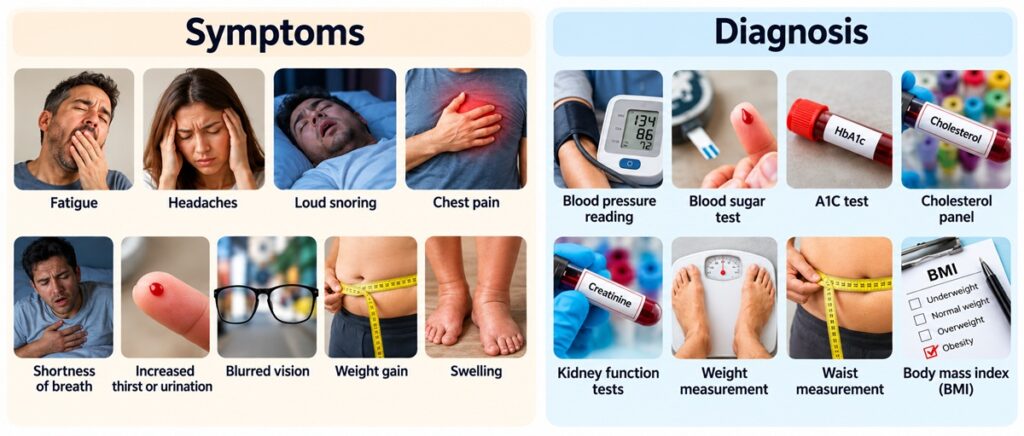
Cardiometabolic conditions often cause no symptoms. High blood pressure usually has no symptoms, CDC notes.
Clinicians find these conditions with blood pressure readings, blood sugar and A1C tests, a cholesterol panel, weight and waist measurements, and kidney function tests. A1C measures average blood sugar over the past two to three months.
The table shows the cutoffs CDC and NHLBI use, in US units.
| Measure | Normal | Borderline or prediabetes | High or diagnosis |
|---|---|---|---|
| A1C | Below 5.7% | 5.7% to 6.4% | 6.5% or higher (diabetes) |
| Fasting blood sugar | 99 mg/dL or below | 100 to 125 mg/dL | 126 mg/dL or higher (diabetes) |
| Blood pressure | Below 120/80 mm Hg | — | 130/80 mm Hg or higher |
| Total cholesterol | About 150 mg/dL (optimal) | — | Above 200 mg/dL may be high (CDC); 240 mg/dL or higher (NCHS) |
| HDL cholesterol | 40 mg/dL or higher (men); 50 mg/dL or higher (women) | — | Below 40 mg/dL (men) or 50 mg/dL (women) |
| Triglycerides | Below 150 mg/dL | — | More than 150 mg/dL |
| Waist | — | — | More than 40 in (men) or 35 in (women) |
| BMI | — | 25 to under 30 (overweight) | 30 or higher (obesity); 40 or higher (class 3 obesity) |
NCHS uses the 240 mg/dL cutoff for the cholesterol figures on this page.
For example, a 45-year-old with a 41-inch waist, fasting blood sugar of 108 mg/dL, and blood pressure of 134/86 mm Hg meets three of five metabolic syndrome measures. The waist is above the cutoff for both men and women. The blood pressure is above the syndrome’s cutoff of 130/85 mm Hg. The readings also fall in the prediabetes range and above the high blood pressure threshold.
Managing cardiometabolic disease over time
Cardiometabolic conditions are chronic, so they are tracked with repeat tests over years. CDC defines a chronic condition as one that lasts a year or more and needs ongoing medical care or limits daily activities.
The US Preventive Services Task Force (USPSTF) and CDC recommend these screening intervals.
- The USPSTF diabetes recommendation covers blood sugar screening for adults 35 to 70 with overweight or obesity. It says screening every three years may be reasonable after a normal result.
- USPSTF recommends yearly blood pressure screening from age 40 or with increased risk. Adults 18 to 39 with a normal reading can be screened every three to five years.
- CDC advises cholesterol checks every four to six years for most healthy adults. It advises more frequent checks for people with heart disease, diabetes, or a family history.
A 35-year-old who is 5 feet 9 inches tall and weighs 210 pounds has a BMI in the obesity range, which starts at 203 pounds for that height. That person falls in the USPSTF screening group for prediabetes and type 2 diabetes.
In the Diabetes Prevention Program trial, a lifestyle program lowered new cases of type 2 diabetes by 58% compared with placebo. The trial followed 3,234 adults with blood sugar above normal for an average of 2.8 years. The lifestyle goal was at least 7% weight loss and at least 150 minutes of activity a week.
The trial’s goal of at least 7% weight loss would be 14 pounds for a person who weighs 200 pounds.
CDC’s National Diabetes Prevention Program offers a yearlong, coach-led lifestyle program for people with prediabetes or at risk of type 2 diabetes.
USPSTF recommends a statin, a cholesterol-lowering medicine, for adults 40 to 75 with at least one cardiovascular risk factor and a 10-year cardiovascular risk of 10% or higher.
About one in five US adults with high blood pressure had it controlled below 130/80 mm Hg in 2021 to 2023, according to NCHS Data Brief 511. CDC found that about one in seven adults with diagnosed diabetes met all four goals for A1C, blood pressure, cholesterol, and not smoking.
Can cardiometabolic disease spread between people?
Cardiometabolic disease does not spread between people. Its conditions are noncommunicable diseases, which WHO describes as not passed from person to person.
A spouse’s diabetes was linked to about a 26% higher risk of diabetes in a 2014 meta-analysis of five studies. The authors pointed to shared habits and surroundings.
Both partners had hypertension, defined as a self-reported diagnosis or a reading above 140/90 mm Hg, in 37.9% of US couples in a 2016 to 2017 survey of middle-aged and older adults.
How cardiometabolic disease is counted
ICD-10-CM, the US system for coding diagnoses, has no single code for cardiometabolic disease. Each condition has its own code.
- E11.9, type 2 diabetes mellitus without complications
- R73.03, prediabetes
- I10, essential (primary) hypertension
- G47.33, obstructive sleep apnea (adult) (pediatric)
- E88.810, metabolic syndrome
US death statistics also count each condition separately. Heart disease was the leading cause of death in the United States in 2024, NCHS reports. Stroke, diabetes, kidney disease, and chronic liver disease and cirrhosis were also among the 10 leading causes.
Target 3.4 of the Sustainable Development Goals aims to cut premature deaths at ages 30 to 70 from four main noncommunicable diseases by one third by 2030. The four are cardiovascular diseases, cancers, chronic respiratory diseases, and diabetes.
Frequently asked questions
What are the most common cardiometabolic diseases?
The most common cardiometabolic diseases in US adults are high blood pressure and prediabetes, each found in more than two in five adults in 2021 to 2023. The American Heart Association’s CKM framework names four conditions. They are cardiovascular disease, kidney disease, type 2 diabetes, and obesity.
Can cardiometabolic disease be reversed?
Cardiometabolic disease can sometimes be reversed to an earlier CKM stage with lifestyle change and weight loss, according to the American Heart Association. This is most likely at stages 1 to 3. For type 2 diabetes, the term for reversal is remission.
Is cardiometabolic disease the same as metabolic syndrome?
Cardiometabolic disease is not the same as metabolic syndrome. Cardiometabolic disease is a broad group of conditions. Metabolic syndrome is one diagnosis, made when a person has three or more of five measures.
This page summarizes US figures and research on groups of people. It is not advice about tests, diet, or medicine for an individual.
Sources
- US figures: National Diabetes Statistics Report, 2026; NCHS Data Brief 511, 2024; NCHS Data Brief 515, 2024; CDC chronic kidney disease report, 2026.
- Studies of CDC survey data: O’Hearn cardiometabolic health study, 2022; Aggarwal CKM stages study, 2024; Attia steatotic liver study, 2025.
- Other studies: Peppard sleep apnea study, 2013; Emerging Risk Factors Collaboration study, 2015; Rinella fatty liver consensus, 2023; Duell fatty liver statement, 2022.
- Definitions: AHA CKM syndrome release, 2023; NHLBI metabolic syndrome, 2022; NHLBI metabolic syndrome causes, 2022; NHLBI metabolic syndrome diagnosis, 2022; CDC chronic disease definition, 2026; CDC diabetes testing, 2024; CDC high blood pressure, 2026; CDC cholesterol, 2024; CDC BMI categories, 2024.
- Linked conditions: CDC diabetes and heart, 2024; CDC kidney risk factors, 2024; CDC sleep and heart health, 2024; NIDDK hypothyroidism, 2021.
- Screening and prevention: USPSTF diabetes recommendation, 2021; USPSTF hypertension recommendation, 2021; USPSTF statin recommendation, 2022; CDC cholesterol testing, 2024; Diabetes Prevention Program trial, 2002; CDC lifestyle change program, 2024.
- GLP-1 labels and trials: Wegovy label, 2026; Zepbound label, 2026; Ozempic label, 2026; Mounjaro label, 2026; SELECT trial, 2023.
- Couples studies: Varghese couples study, 2023; Leong spousal diabetes review, 2014.
- Noncommunicable status and counting: WHO noncommunicable diseases topic; WHO noncommunicable diseases fact sheet, 2025; NCHS Data Brief 548, 2026.
- Guidelines and clinical references: AHA CKM advisory, 2023; CDC ICD-10-CM tool, 2026; ADA remission consensus report, 2021; NIDDK dictionary, metabolism.